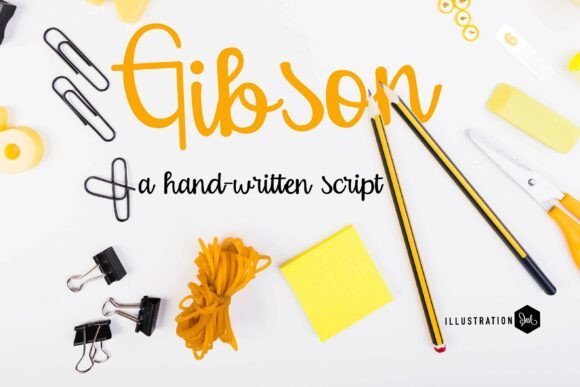
Gibson: A Hand-Crafted Font for Branding Projects
Gibson in Logo Design for a Cozy Café
As I opened my design board for a new project—a cozy café called “Morning Brew”—I knew the brand needed something warm and inviting. That’s when I first tested Gibson, this hand-crafted font with a casual script feel and a print-like uppercase. The light and bold versions gave me options to play with, and I immediately felt like I had found the right voice for the brand.
Gibson’s handwritten style brought a personal touch that felt perfect for a small, community-focused café. I used the bold version for the main logo, and the light version for the tagline, creating a balance between elegance and approachability. It wasn’t just about aesthetics; it also helped set the tone for the entire brand identity.
Gibson on Packaging for a Skincare Brand
Next up was the packaging design for a skincare brand. The client wanted something clean yet organic, and I thought Gibson could bridge that gap. This hand-crafted font is designed to look like it was written by hand, which added a sense of authenticity to the product labels.
I experimented with how Gibson looked on a bottle label, and it worked surprisingly well. The casual script didn’t feel too formal, while the uppercase letters provided clarity. I paired it with a sans-serif font for the ingredient list, ensuring readability without losing the charm of the handmade aesthetic.
The final result felt cohesive and professional, proving that Gibson can work across different platforms—from digital mockups to printed materials.
Gibson for Social Media Graphics and Website Headers
When designing social media assets for the same skincare brand, I realized how versatile Gibson could be. It was ideal for Instagram posts and Facebook banners, where a bit of personality goes a long way. The casual script fit perfectly with the brand’s message of natural beauty and self-care.
I used the light version of Gibson as the headline for a promotional post and the bold version for call-to-action buttons. It created a visual hierarchy that guided the viewer’s eye naturally. On the website header, I placed the brand name in Gibson, which made the homepage feel more welcoming and human.
What stood out was how Gibson maintained its character across different screen sizes and resolutions. It wasn’t just a pretty font—it performed well in real-world applications.
Gibson in Editorial Design and Print Materials
For a recent editorial design project, I needed a font that could stand out without overwhelming the content. Gibson came in handy again, especially for headlines and pull quotes. Its script style gave the design an artistic flair, while the uppercase letters kept things legible and structured.
I also used it in printed marketing materials like flyers and brochures. The font’s hand-crafted feel helped create a tactile experience, making the print feel more special. It worked particularly well on business cards, where a small but impactful detail can make all the difference.
One thing I noticed was how Gibson complemented other typefaces. When paired with a serif font for body text, it created a nice contrast that elevated the overall design without clashing.
Gibson for Merchandise and Brand Consistency
In another project, I was asked to design merchandise for a creative studio. T-shirts, mugs, and stickers were part of the lineup, and I wanted the font to be consistent across all items. Gibson fit the bill perfectly because of its versatility and recognizable style.
The hand-crafted nature of Gibson gave the merchandise a unique edge that aligned with the studio’s branding. Whether it was a mug with the studio name in bold Gibson or a t-shirt with a light version of the font, everything felt cohesive and intentional.
It was important to test the font across different surfaces and materials to ensure it remained legible and visually appealing. Gibson handled it all with ease, proving its worth in commercial design contexts.
Gibson for Digital Templates and Commercial Use
Finally, I explored using Gibson in digital templates for clients who needed quick and customizable design assets. The font’s light and bold versions allowed for flexibility, and I found that it worked well in both modern and traditional layouts.
I recommended pairing it with a modern sans-serif for web headers and a classic serif for body copy, ensuring that the brand’s message stayed clear and engaging. For those looking to use Gibson in their own projects, I’d suggest testing it in different weights and sizes before committing to a full brand system.
This hand-crafted font has proven itself time and again in real design scenarios. Whether you’re working on a small boutique, a local restaurant, or a creative studio, Gibson offers a unique and professional solution that feels both personal and polished.